




A shared routine.
A personal focus.
Both formats can work for beginners and experienced players. The choice depends on how your child learns, what they want to practice, and where they need help.
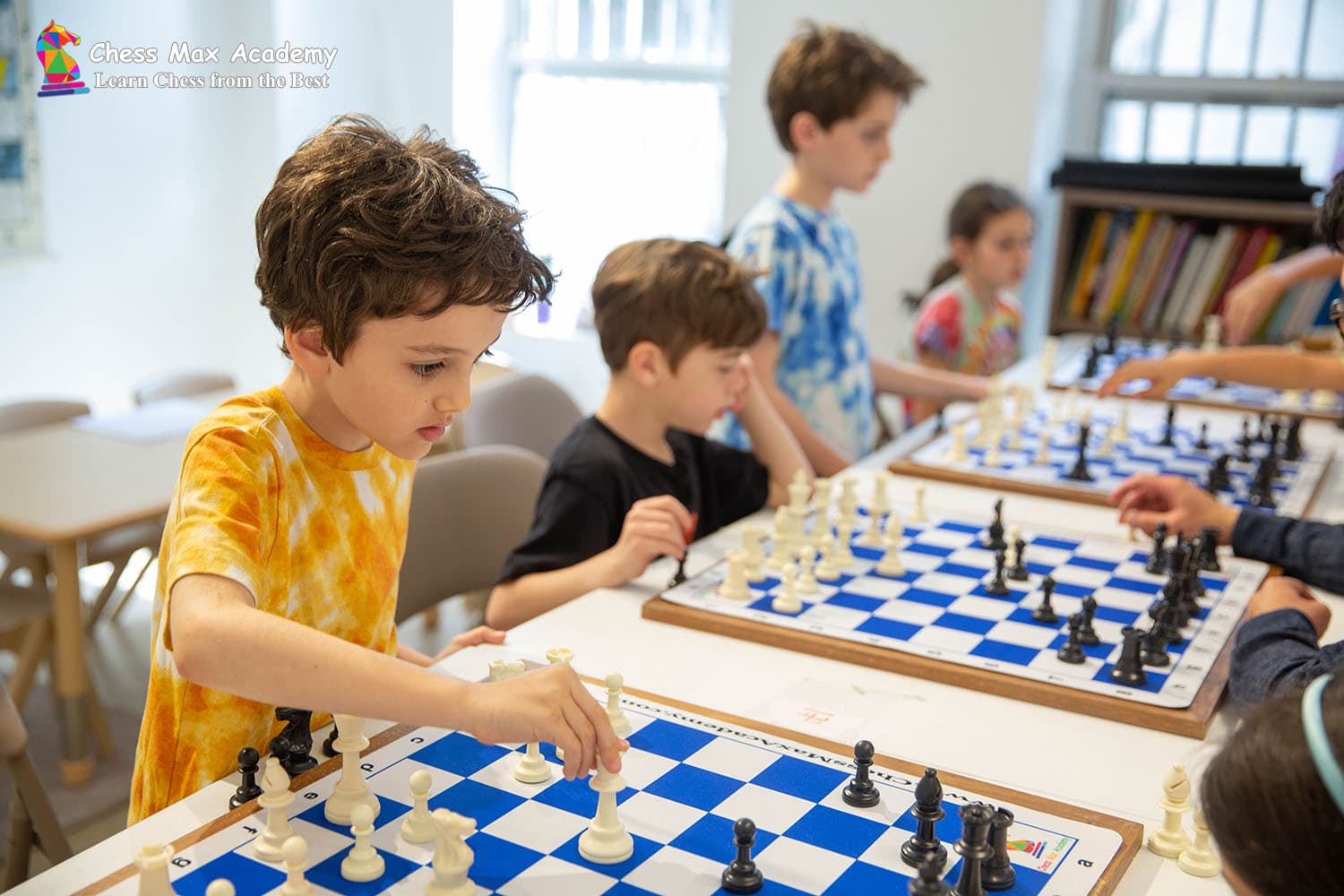
Learn and play with peers.
A regular setting for shared instruction, guided practice, and games with other children. Consider a group when your child enjoys playing with peers and can take part in a shared explanation.
Look for: suitable placement, time to play, and a coach who can explain how different learning speeds are handled.
Work on one child’s next step.
One-to-one time for questions, explanations, and reviewing the student’s own games. Consider private coaching when you can name a difficulty or goal that would benefit from individual attention.
Look for: a clear first priority, explanations at your child’s level, and a manageable practice plan.
For a beginner, a useful priority might be recognizing check and choosing a legal reply. For a more experienced player, it might be understanding the decisions behind a lost game. Choose around the need, then confirm the available options.
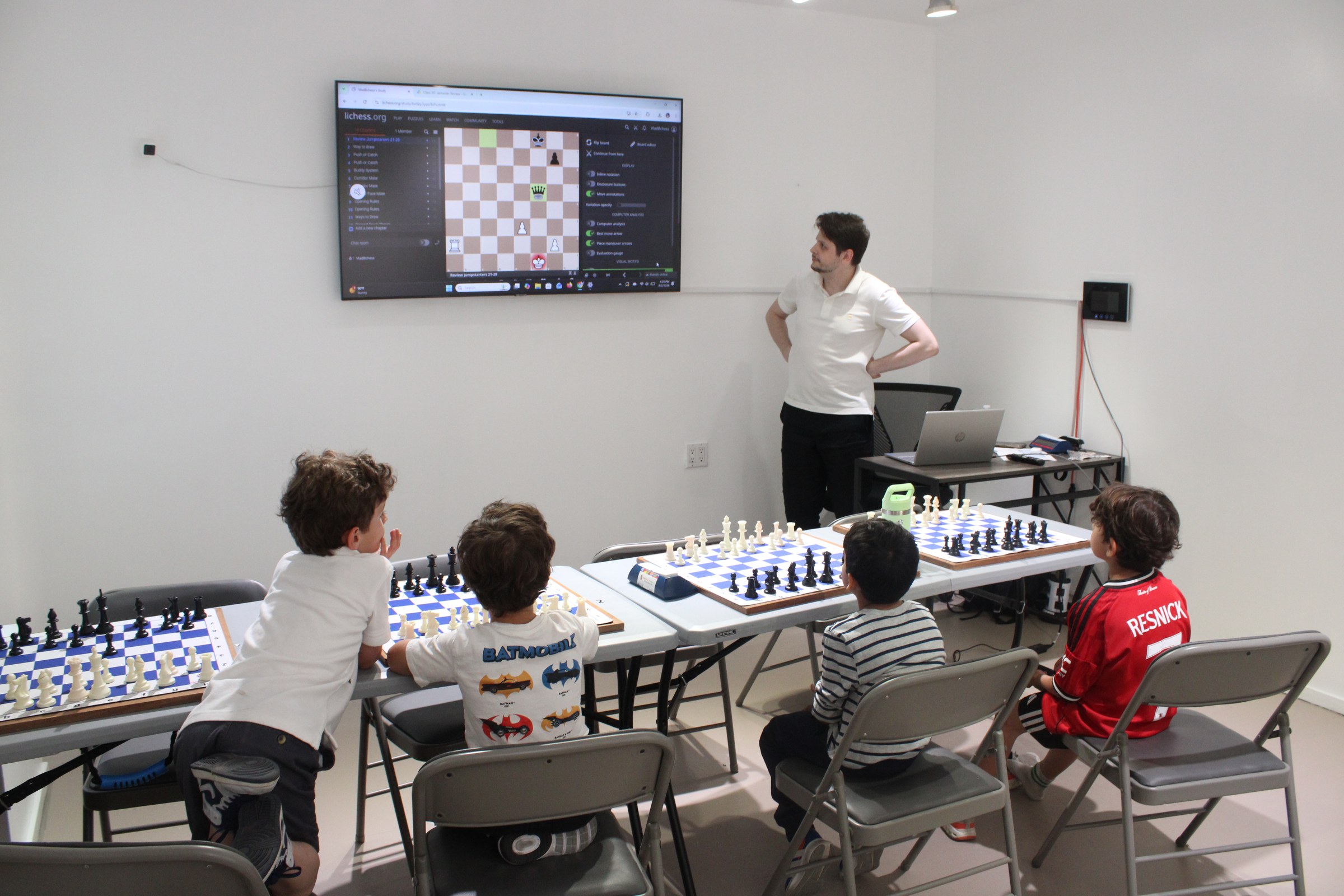
The right level matters in either format.
Knowing how the pieces move is different from being ready for an advanced tactical lesson. Tell the coach what your child can do independently and where they still need reminders.
Chess Max offers a free level evaluation for group placement. For private lessons, the team considers the student’s level, goals, personality, and coach availability.
Which situation
sounds familiar?
Use these examples to start a conversation. They illustrate how to compare options; they are not individual student stories or promises of results.
“My child wants to start with a friend.”
Ask whether both children fit the same beginner group. Being friends or the same age does not necessarily mean they need the same level. Explain that learning together matters before you register.
“The same mistake keeps coming back.”
Bring a saved game or a specific position. Ask whether the issue needs individual review, more practice with a familiar idea, or a different group placement. One example is more useful than “needs to improve.”
“They enjoy lessons, but need opponents.”
A group may address the missing practice opportunity. Ask how games are organized and whether the other students’ experience is appropriate. Make sure the proposed lesson actually includes the playing time your child needs.
“The trip is difficult for our family.”
Compare live online classes with in-person options. Online versus in-person is a separate choice from group versus private. Confirm the actual time, device setup, and coach availability before deciding.
A remote option
For learning from home, explore live online chess classes. Ask what your child needs to use independently and what help a parent should provide before the lesson starts.
Five questions
for the coach.
Bring one priority, a recent difficulty, and the practical limits of your week. Ask for a concrete starting plan.
For private chess lessons in NYC, mention your preferred branch: Upper West Side, East 78th Street, or Lexington at 93rd. The team can confirm in-person options.
- What would you focus on first?
Share what your child knows and ask which next skill deserves attention.
- How would you explain it at this level?
Ask for an example of an activity or position the coach might use.
- What would practice between lessons look like?
Discuss an amount your child and family can realistically sustain.
- How would we review the fit?
Ask what feedback is available and how to raise questions if the pace feels wrong.
- What can we actually schedule?
Confirm the coach, format, lesson length, available time, and current terms.
Make the cost comparison fair.
A semester fee and an hourly coaching rate describe different purchases. Compare the number and length of sessions, practice or feedback included, and trial and cancellation terms.
Use the current group schedule or private coach information for the applicable price. A lower rate or a higher chess title alone does not tell you which instruction fits your child.
Give each format a clear purpose.
A group can provide peer games, while an individual session can examine one of those games in depth. Ask the coaches how the work would connect.
A child does not need both formats from the beginning. Start with the most useful available option, then discuss a change when you have something specific to address.
One priority.
A clearer next move.
Explore group placement for a shared learning routine, or private coaching for an individual plan.