




Ready for the experience,
not a perfect score.
A first tournament introduces opponents, clocks, and a different kind of chess day. Start with your child’s interest and the skills they can use without someone guiding every move.
Can they play independently?
Try a complete practice game. Notice whether your child knows legal moves, recognizes check, and understands when the game is over. Share any difficulties with their coach before choosing an event.
Can they ask for help?
Practice a simple routine for a rules question: stop guessing and ask the tournament director. Your child should know that asking an official for help is part of playing in an organized event.
Do they want to try?
Talk about meeting new opponents, waiting between games, and possibly losing. Ask what sounds exciting and what feels uncertain. A coach can help you judge whether more class practice would be useful first.
These are conversation prompts, not entry requirements. Each organizer sets the event’s eligibility and procedures. Read the current announcement and ask which section suits a first-time player.
Rehearse the unfamiliar parts.
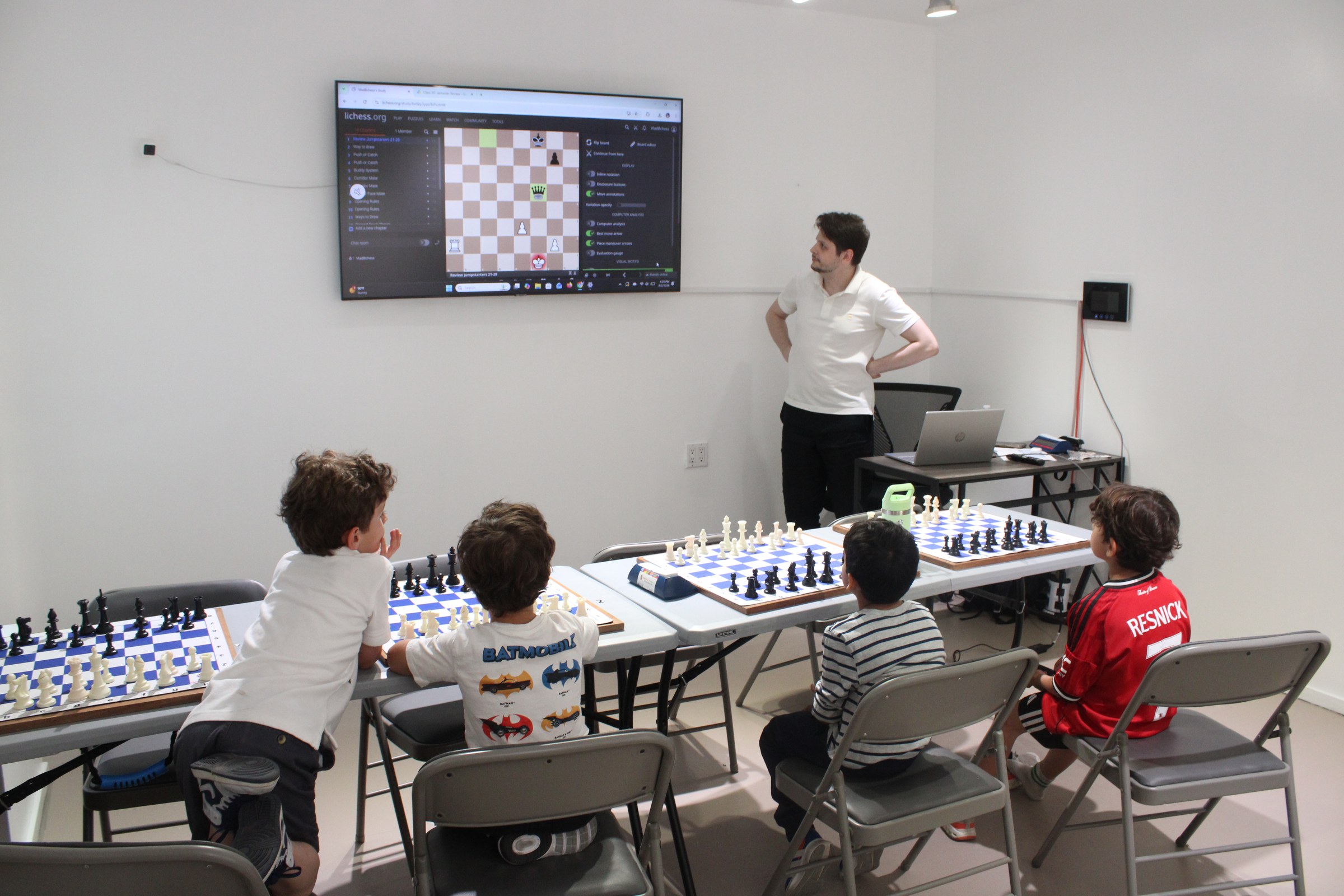
Ask the coach to introduce the clock setting used by the event and explain how to find a pairing, report a result, and call the director. Check whether recording moves is required for your child’s section.
Choose one small process goal together: find the right board, ask clearly when unsure, or take a moment to look at the opponent’s last move.
A few terms.
A much clearer day.
Before paying, confirm the section, membership requirements, round schedule, equipment, and expected finish. Details vary between events and locations.
Section & rating
A section is a division within an event. It may use a rating limit, grade, or other eligibility rule. Tell the organizer this is your child’s first tournament and ask which section to enter. Do not assume an app rating is the rating requested.
Rounds & pairings
A round is one scheduled stage of play; pairings tell players whom and where to play. In a Swiss-system event, a loss does not eliminate a player. Check each new pairing and stay available for the remaining rounds.
Time control
This describes the time available to each player. An announcement may also specify delay or increment. Ask the organizer or coach to explain the exact setting and practice with it. Do not estimate pickup time from one game’s clock alone.
Rated play & membership
For a US Chess-rated event, check the current membership and player-ID requirements with the organizer. Ask how a first-time player should register. A rating is a chess-performance measure, not a judgment of your child.
NYC & Greenwich
Use the current Chess Max tournament listings to choose a location and date, then read the linked organizer’s details. Registration arrangements and event formats can differ.
Give the day
a simple rhythm.
Save the event announcement and registration confirmation somewhere easy to find. Follow its arrival instructions, and allow time to locate the playing room and parent waiting area.
For a rules or pairing question, speak to the tournament director. Avoid trying to resolve an issue by approaching another child during a game.
- Arrive and check the entry.
Follow the organizer’s check-in procedure. Confirm the player’s name and section, and ask where pairings and updates will appear.
- Find the pairing and board.
Help your child understand where to look, then follow the event’s rules about when parents must leave the playing area.
- Finish and report the result.
Make sure your child knows the event’s result-reporting procedure. If the players disagree about something, ask the director.
- Reset for the next round.
Find a quiet place for water, food if allowed, and a break. Check the next start time instead of assuming every round follows immediately.
- Check before leaving.
Confirm that play is finished. If you must leave early, tell the director so your child is not paired for another round.
Pack for this event.
Save the confirmation, venue details, and any required membership information. Bring a water bottle, permitted snacks, a layer of clothing, and a quiet activity for breaks.
Check whether you must supply a board, set, clock, or notation materials. Equipment provision varies; the announcement or organizer should settle the question.
Keep the conversation calm.
During play, let the child make the chess decisions and follow the spectator rules. Between games, ask “Would you like a break or to tell me about it?” before starting an analysis.
Afterward, discuss one memorable moment and one question for the coach. Leave room for mixed feelings. The next useful step may be another event, a game review, or more time enjoying class.
Still choosing the learning path?
The beginner class guide helps describe your child’s starting point. For help choosing a learning format, read Group or Private Chess Lessons? For individual game review, explore private chess coaching.
Further reading: U.S. Chess Center’s tournament guide for parents explains common tournament terms. For current membership and rated-play questions, use US Chess guidance and the specific event’s organizer. Older guides may contain outdated fees or procedures.
Find a tournament.
Ask the right questions.
Explore current dates in NYC and Greenwich, or start with class placement if your child would benefit from more practice.