




Start with what your
child knows.
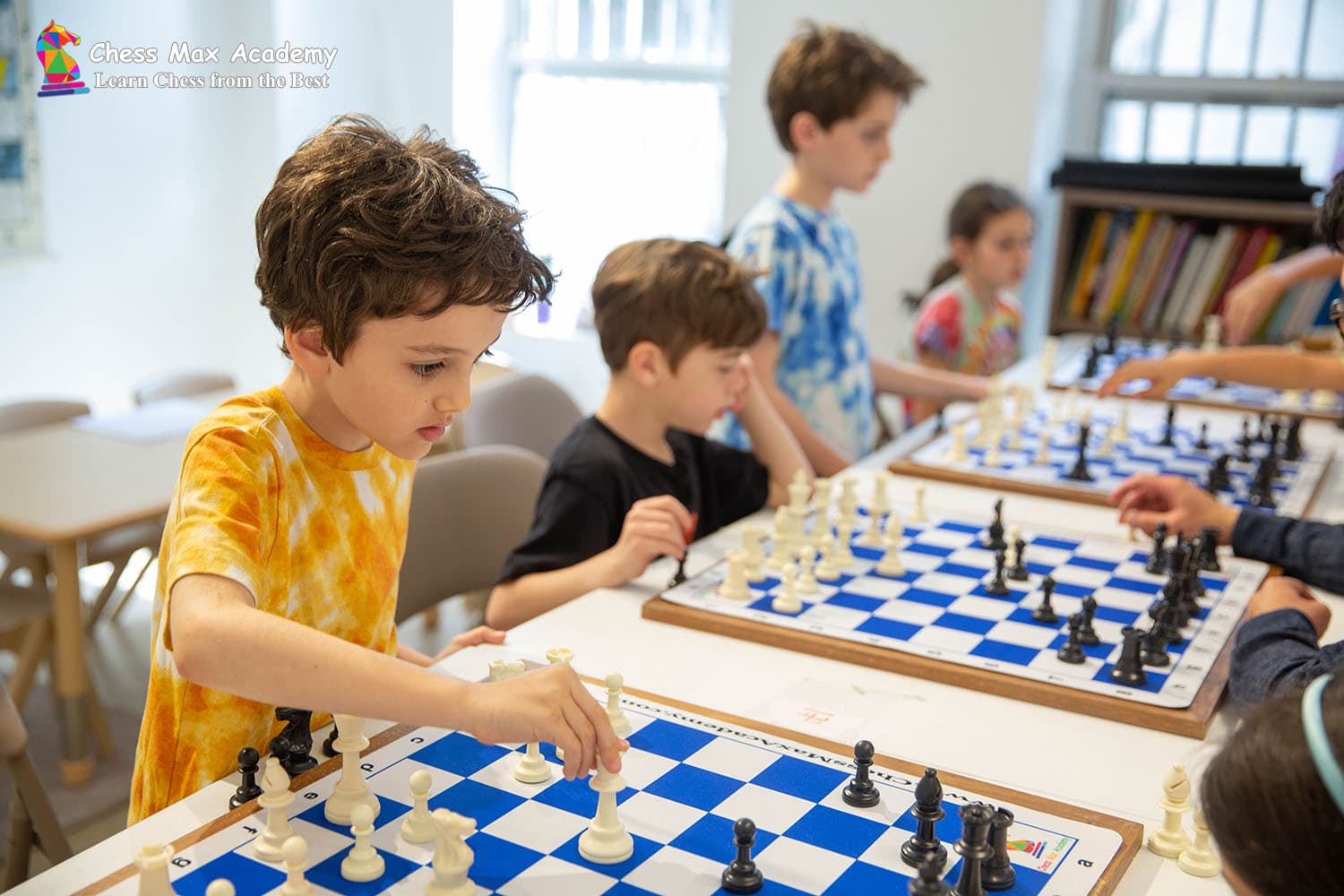
You do not need a rating or a competitive goal. Describe what your child can do at the board, then use that starting point to choose a suitable class.
Brand new to chess
Interested in the pieces, but does not yet know how they move. Tell the coach this is a first introduction to the game.
Knows some rules
Can move several pieces, but needs reminders about legal moves, captures, or check. Explain which parts still need help.
Can play a game
Knows the moves and basic rules, but often misses a threat or needs help finishing a game. A recent position can help a coach understand.
These are descriptions to share with a coach, not formal class levels. Mention family games, a chess app, or a school club. An app level alone does not show how independently a child plays over a real board.
Wondering whether this is the right age to begin? Read our guide to starting chess and readiness for simple first activities and questions to discuss with a teacher.
A good fit makes the first lesson easier to navigate.
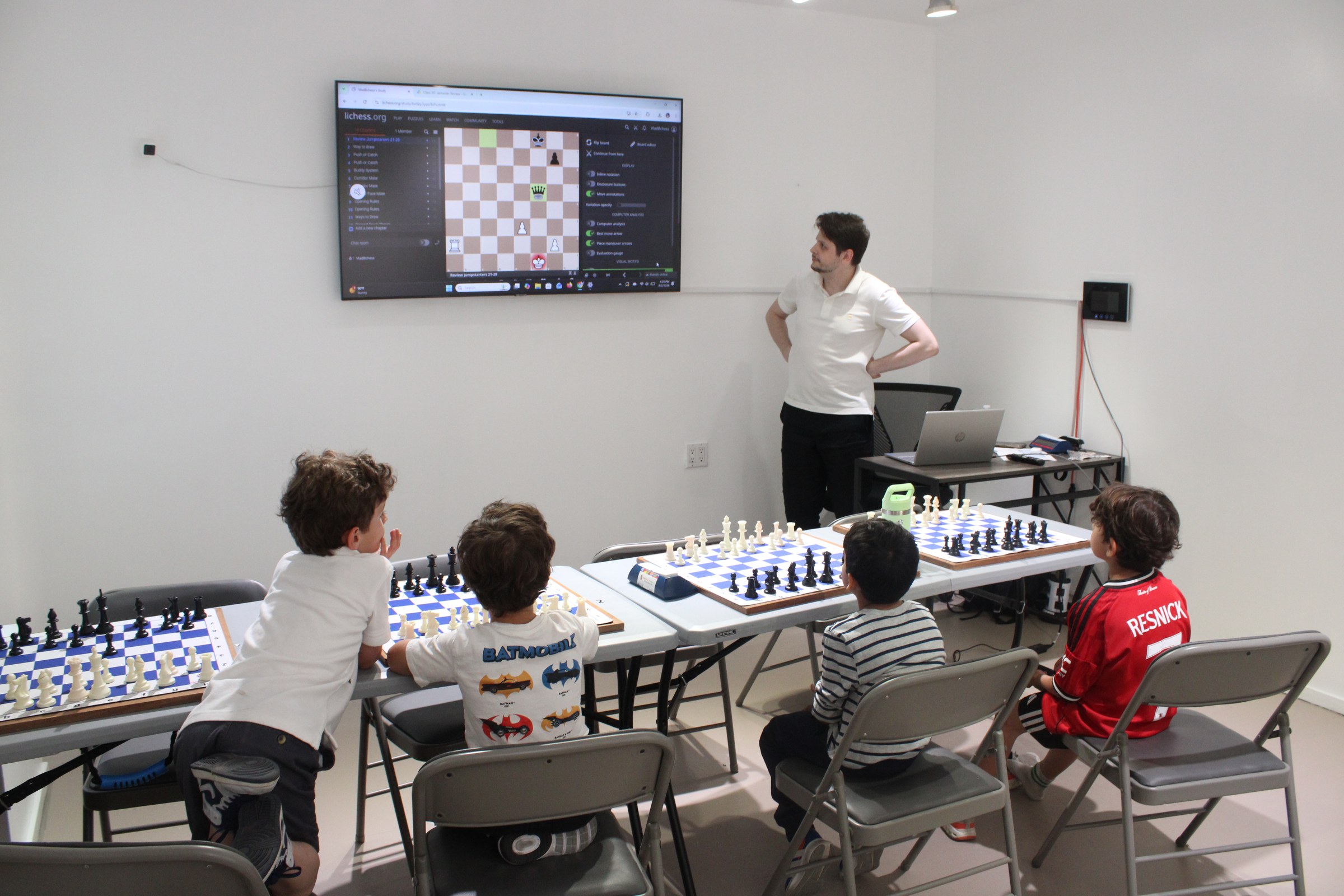
Two children of the same age may need different instruction. Ask what students are expected to know on arrival, and what happens if the class feels too easy or too difficult.
Chess Max offers a free level evaluation to help families choose a group. You can start there when you are unsure about placement.
Shared discovery.
Individual attention.
Choose the format around the help your child needs. Being a beginner does not automatically mean private lessons are necessary.
Group chess classes
A regular setting for instruction, practice, and games with other children. Consider a group if your child enjoys playing with peers and can join a shared explanation with support.
Ask the coach: How are instruction and playing time balanced? How do you help children who finish at different speeds?
Private chess lessons
Time for individual questions and explanations at your child’s pace. Consider one-to-one coaching when a specific difficulty needs attention or you want an individual learning plan.
Ask the coach: What would you focus on first, and what could we practice between lessons?
Prefer learning online?
Online describes the setting; group and private describe how attention is shared. Consider whether your child can use the device and follow a shared board, and ask what parent help is needed for setup. Explore live online classes →
Five questions.
A clearer choice.
A short conversation can tell you more than a class name. Bring your child’s experience, your practical needs, and these questions.
- What should my child already know?
Explain their actual experience instead of guessing a class level.
- What will they work on first?
Ask for a concrete example of an early skill or activity.
- How will I hear about progress?
Ask what feedback is available and whom to contact with a question.
- What should we bring or prepare?
Check equipment, arrival instructions, and online setup if relevant.
- What are the current terms?
Confirm tuition, lesson length, trial options, missed-class arrangements, and the schedule before paying.
Give the coach something specific.
Share one thing your child enjoys and one thing they find difficult. For example: “She likes moving the pieces, but needs help recognizing check.”
After class, ask, “Can you show me one thing you tried?” Use the conversation to understand the experience without turning it into a test.
Notice the small chess moments.
Remembering a piece’s move, spotting a threat, or explaining why a move is legal can all help you understand what your child is learning. Winning also depends on the opponent.
Ask the coach for one manageable idea to practice at home. A short game or a few positions may be a useful starting routine; adjust the amount together.
Find your NYC location.
Compare the trip from school or home. Each branch has its own schedule; check for a suitable group at the location that works for you.
Let’s find a starting point.
Explore current groups and the free level evaluation, or learn about private coaching if individual pacing is your priority.