




Start with curiosity.
Find a pace that fits.
Children can meet the board through simple activities before they are ready to play a complete game. A birthday helps you read a class listing; it does not tell the whole story about the right starting point.
Can a child start chess at 3, 4 or 5?
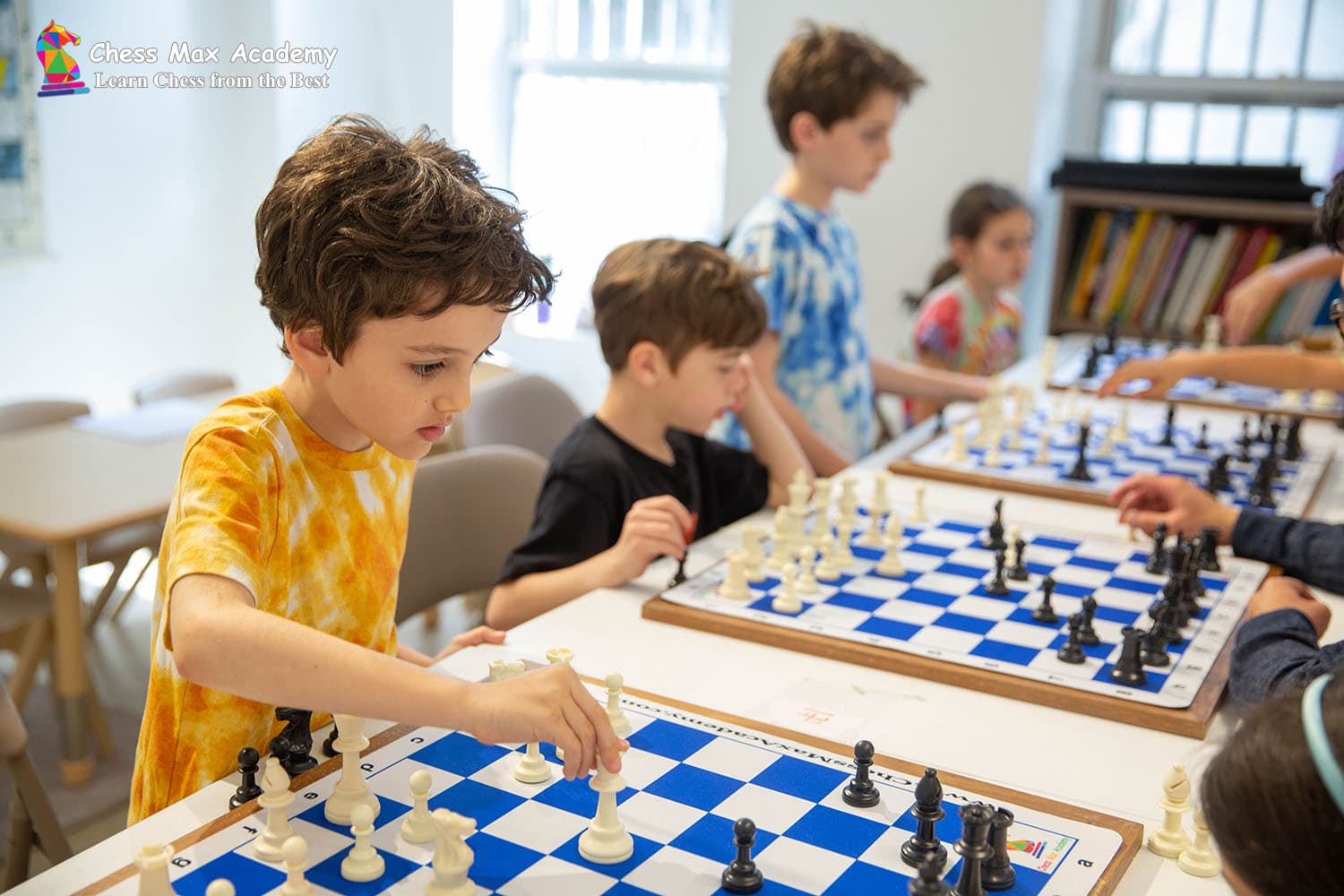
Preschool chess is an option to explore. Chess Max Academy’s current Chess for Tots listings give age guidance of 3½–5 on the Upper West Side and 3–5 in Greenwich. Both are preschool beginner classes. Check the specific programme and ask about placement before enrolling.
For a first introduction, you might name pieces, explore the squares or try one kind of move. Joining a group also brings instructions, other children and transitions between activities. Ask what a typical lesson looks like and how the teacher helps a child who needs another demonstration.
What draws them in?
Notice whether your child asks about the pieces, enjoys choosing a move or wants to return to an activity. You can invite them to explore without asking them to finish a full game.
What can you try together?
Show one move, then invite your child to try it. Notice what helps: a second example, moving the piece together or using fewer pieces on the board. Share that with the teacher.
How does shared play feel?
Try alternating a few simple moves. If waiting or a changed plan is difficult, describe the situation to the teacher and ask how their class handles it.
These are observations for a conversation, not a pass/fail test. A child does not need to get every activity right to begin learning.
Describe their experience,
not just their age.
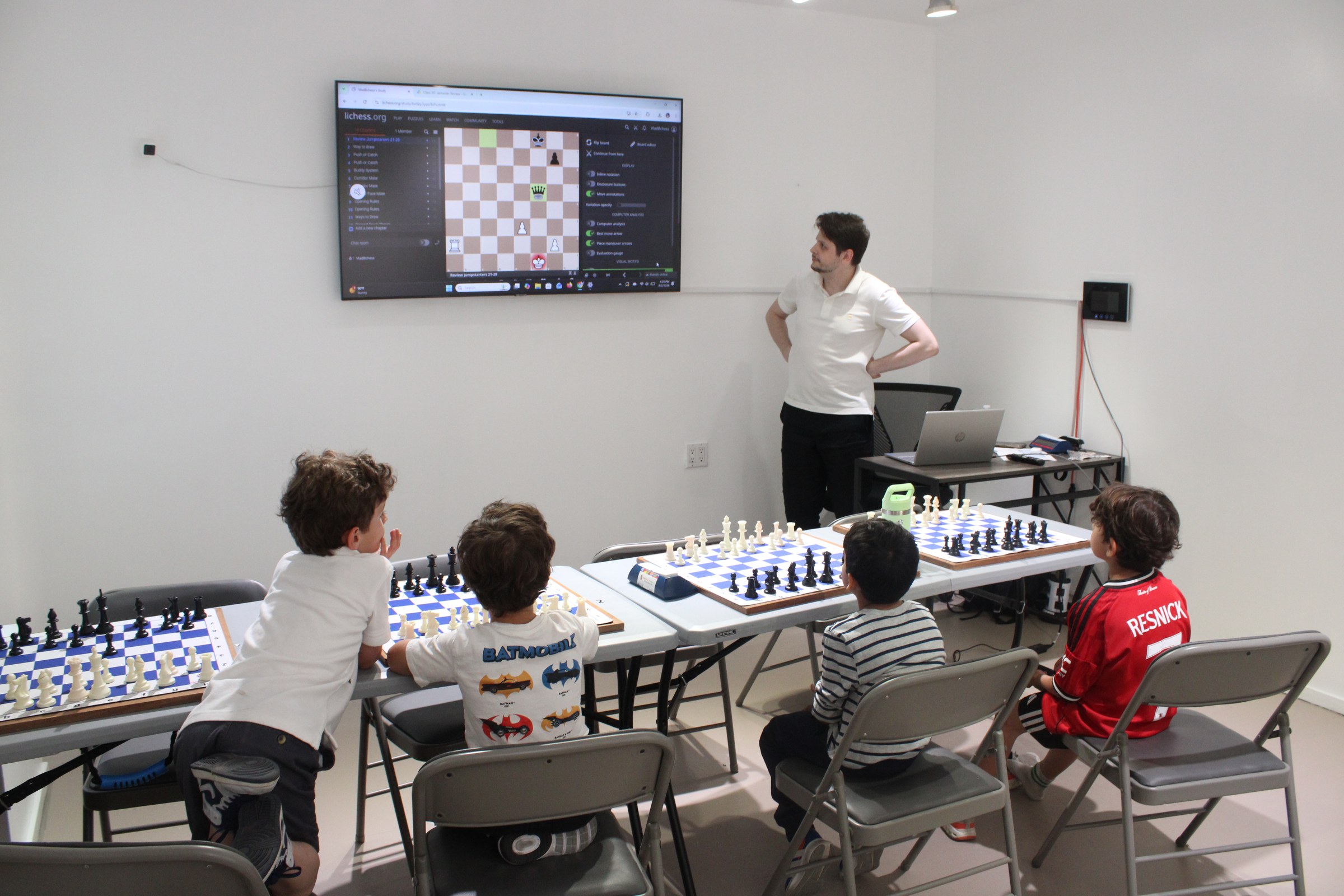
A child starting at 7, 9 or later still needs an introduction that matches what they know. Tell the teacher whether they are new to the pieces, know some moves or can already finish a game.
Ask how beginners of that age are placed. An older child’s first lesson does not need to begin with material intended for an experienced player.
One piece.
One small idea.
Pick one of these suggested activities and keep the first attempt brief. Stop or simplify it when your child wants a break. There is no score to reach before asking about lessons.
Find a square.
Use an empty board. Take turns pointing to a light square and a dark square. Then pick a square and look for the squares that touch it along an edge. You can demonstrate instead of explaining everything at once.
Choose a destination.
Put one rook on an otherwise empty board. Show that it moves along a row or column. Invite your child to point to a square it could reach in one move, then slide the rook there together.
Keep a useful note.
Afterward, jot down what your child chose, what needed a demonstration and whether they wanted another turn. A concrete example gives a teacher more to work with than “good at chess” or “not ready.”
Ask about the lesson
your child will experience.
Bring their age, previous experience and one observation from playing together. The aim is to understand the starting group and the support available.
- How are new children placed?
Ask how the programme uses age and current chess knowledge, and what happens if the initial group is too easy or too difficult.
- What does a first lesson include?
Ask about demonstrations, short games, partner play and breaks or changes of activity. Check the actual lesson length on the current schedule.
- What does the teacher expect already?
Clarify whether children need to know any moves, read instructions or use a device. Ask how a complete beginner joins in.
- How will we discuss the fit?
Ask what feedback is available after a first lesson and how to raise questions about pace, comfort or the next step.
Do they need to read first?
At home, you can introduce the board by pointing and moving pieces together. For a class, ask whether it uses written tasks, notation or an online interface, and how the teacher supports a child who is not yet reading.
Leave room to try again.
If your child is uninterested, put the board away and offer another chance later. If they enjoy the pieces but a group feels like a large step, describe that to a teacher and discuss a suitable introduction.
Ready to compare learning formats?
Our Group or Private Chess Lessons guide explains the different kinds of support. When complete games become comfortable and your child is interested in competing, the first-tournament guide covers that separate step.
Programme details: the linked Chess Max schedules. Further reading: FIDE’s Chess School Award checklist covers age and skill grouping, teaching materials, educator qualifications and chess minigames. The activities and conversation prompts above are suggestions for parents, not a FIDE readiness assessment.
Bring their curiosity.
Ask about placement.
Explore the current class options, then discuss a starting point based on your child’s age and experience.